

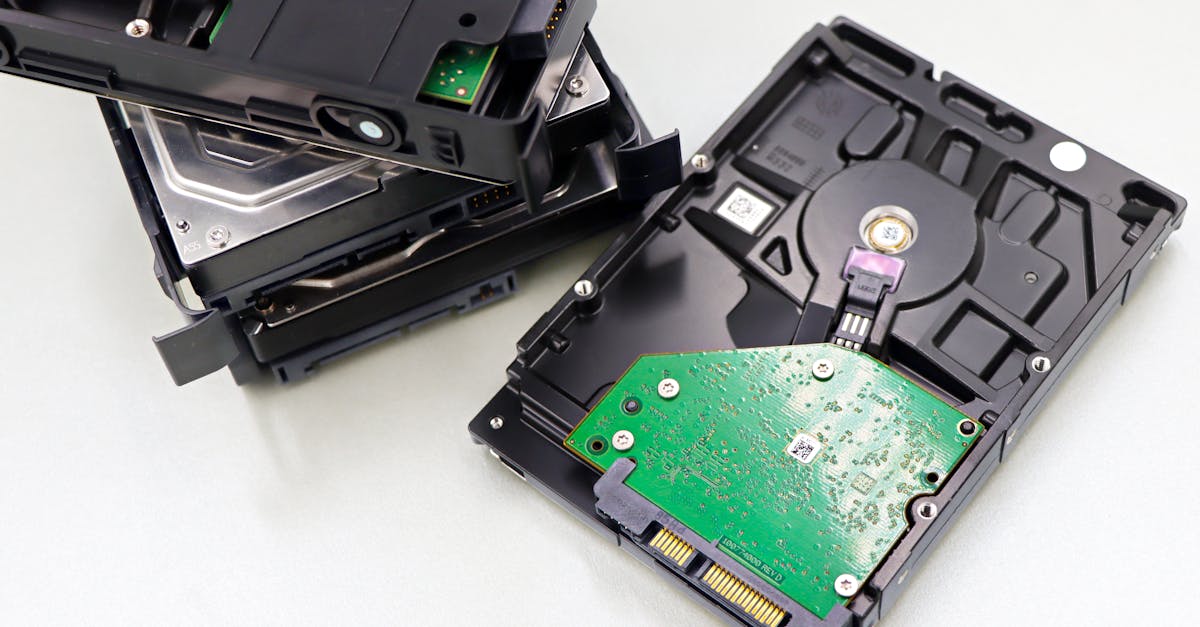
The 20TB WD EasyStore that Best Buy sold for $249.99 in November 2024 is on "sale" this Black Friday for $549.99. That is the same SKU (6500985), at the same store, at 2.2x the price. In $/TB terms it went from $12.50 to $27.50.
Those numbers come from Alex Kretzschmar's post Hard Drive pricing has gotten bad, published November 26. Replacing a drive or two on Black Friday is an annual tradition for him, and he kept the receipts going back to 2018, so this is eight years of one buyer tracking one product line. If a disk in your NAS just died and the replacement price made you blink, you read it right. Hard drive prices in 2026 are bad, recertified drives are worse, and the Black Friday deals don't fix either. I'll go through his numbers, where the supply went, and what I'd actually buy (or not buy) this week.
Hard drive $/TB from 2018 to 2026, from actual receipts
Here is Kretzschmar's purchase history. All shucked WD EasyStores from Best Buy, before tax:
| Date | Drive | Price each | $/TB |
|---|---|---|---|
| Nov 2018 | 10TB | $179.99 | $18.00 |
| Oct 2020 | 12TB | $174.99 | $14.58 |
| Nov 2021 | 14TB | $199.99 | $14.29 |
| May 2022 | 14TB | $249.99 | $17.86 |
| Aug 2022 | 14TB | $239.99 | $17.14 |
| Oct 2023 | 18TB | $199.99 | $11.11 |
| Nov 2024 | 20TB | $249.99 | $12.50 |
| May 2025 | 20TB | $279.99 | $14.00 |
| Nov 2026 (listing) | 20TB | $549.99 | $27.50 |
From 2018 to 2025 the line wobbled between $11 and $18 per terabyte. Then it jumped. The October 2023 order was three 18TB drives, 54TB for $599.97. This year's single 20TB "deal" costs fifty dollars less than that whole order.
Buying smaller doesn't get you out of it either. Best Buy's 8TB Black Friday special is $299.99, which is $37.50/TB, the worst number in the whole post.
Most recertified enterprise drives went up even more
The usual answer to "shucking got expensive" is "buy recertified Ultrastars or Exos from ServerPartDeals." Kretzschmar did exactly that in August 2024: four recertified 14TB Ultrastars for $529.96, or $9.46/TB.
Here's what the same listings looked like on November 26, 2026:
| Drive | 2024 | Nov 2026 | Change per TB |
|---|---|---|---|
| WD Ultrastar HC530 14TB 4Kn recert (WUH721414ALN604) | $9.29/TB | $14.64/TB, sold out | +58% |
| WD Ultrastar HC530 14TB 512e recert (WUH721414ALE6L4) | $9.64/TB | $30.64/TB, sold out | +218% |
| Seagate Exos X20 20TB refurb (ST20000NM007D) | $11.80/TB | $29.45/TB, in stock | +150% |
| Seagate Exos X22 20TB recert (ST20000NM004E) | $11.25/TB | $32.45/TB, sold out | +188% |
Three of the four recert listings rose faster than the EasyStore's +120%, so that escape hatch is mostly gone too. The one drive in stock costs more per TB than the Best Buy EasyStore.
Look at the two HC530 rows, though. Same drive, same capacity, and the 4Kn version was less than half the price per TB of the 512e version. I'll come back to that.
Why hard drives got so expensive: AI data centers bought the supply
The manufacturers explained the shortage themselves on their earnings calls, which The Register wrote up in February.
Western Digital's CEO said "We're pretty much sold out for calendar '26", with firm purchase orders from the top seven customers and long-term agreements with two of them for 2027 and one for 2028. Seagate CEO Dave Mosley said on Seagate's call: "Our nearline capacity is fully allocated through calendar year 2026." Kretzschmar adds that 89% of WD's revenue in fiscal 2026 came from its cloud business.
How do GPUs end up eating spinning rust? The Lobsters thread worked through it. Flash and HBM compete for the same fabs, so SSD prices went up. Workloads that had moved to SSD moved back to HDD. Then hyperscalers building training clusters needed somewhere cheap to keep the data. One commenter compared it to housing, with HDDs as Bristol: people priced out of London buy there, and six months later Bristol is expensive too.
Kretzschmar goes further and calls it "mass market collusion by the HDD manufacturing cartel." I don't think you need a cartel to explain this. Three companies make every hard drive you can buy (Seagate, WD, Toshiba), and their biggest customers are paying for output years in advance, so nobody has to coordinate anything. Homelab buyers are such a small share of their revenue that no manufacturer has a reason to fight for us. Cartel or not, your NAS pays the same price.
What to do if you need NAS drives right now
1. Only buy what you actually need
Before you order anything, check how full the pool really is:
zpool list -o name,size,alloc,free,cap,frag
zfs list -o name,used,compressratio -s used | tail -20
If you're at 60% and growing slowly, a dead disk in a raidz2 or mirror doesn't justify a capacity upgrade. Replace the one drive and stop there.
2. If you buy recertified, get the 4Kn model
The HC530 table shows it: $14.64/TB for 4Kn against $30.64/TB for 512e. Both listings were sold out on November 26, so treat this as "grab 4Kn when it restocks." My guess is the gap exists because a lot of buyers avoid 4Kn, since some old RAID cards and Windows boot setups can't handle it. Linux, ZFS, mdadm and TrueNAS handle it fine, and most modern ZFS pools already use ashift=12 (4K sectors). Check what your current disks report:
lsblk -o NAME,MODEL,PHY-SEC,LOG-SEC,SIZEWhen a recert drive arrives, read SMART before you add it to the pool and run a long self-test:
smartctl -a /dev/sdX | grep -E 'Power_On_Hours|Reallocated|Pending|Offline_Uncorrectable'
smartctl -t long /dev/sdX
Recertified drives come with real power-on hours, and that's normal. Non-zero reallocated or pending sectors on a drive you just received are a reason to send it back.
3. Consolidate onto fewer, larger drives
This is Kretzschmar's own plan: go "from ten spinners to five." A 20TB drive in one bay does the work of two 10TBs, with one motor spinning instead of two and one fewer disk that can die on you. Per TB it costs the same or more right now; what you save is bays and power. On ZFS this means building a new pool and running zfs send | zfs receive across, because you can't shrink a raidz vdev down to fewer disks. At these prices he thinks the hassle might be worth it, and I agree.
4. Or wait, and don't count on 2027
One commenter in the thread says they're trying to defer any IT purchases until next year. Another has seen posts predicting prices will crash next year because buyers aren't taking all the GPUs Nvidia ships, while admitting they have no idea if that's true. Look at the long-term agreements again: WD has customers signed into 2028, and Seagate said cloud customers are already talking about their 2028 demand. Waiting makes sense if your array has redundancy to spare. It doesn't make sense if you're running degraded and hoping.
So should you buy hard drives this Black Friday?
A $549.99 "Black Friday special" isn't a discount when the same box cost $249.99 two years ago. Four 20TB drives cost $999.96 in 2024 and $2,199.96 this week, and that's before you buy a case or a board. If you have a healthy pool, sit this one out. If a drive died, replace that one drive, buy 4Kn recert if any is in stock, and check SMART before you trust it.
What's the lowest $/TB you've paid this year, and was it new, shucked or recertified? If you found anything under $15/TB in November 2026, I'd like to know where.
Sources
- Alex Kretzschmar, Hard Drive pricing has gotten bad, Nov 26, 2026
- Lobsters discussion
- The Register, Hard drives already sold out for this year – AI to blame, Feb 20, 2026